Block Craft World Sandbox
- 4.6
- Rating
- 5.00M
- Installs
- Free
- Price
 Analysis by App-foxy
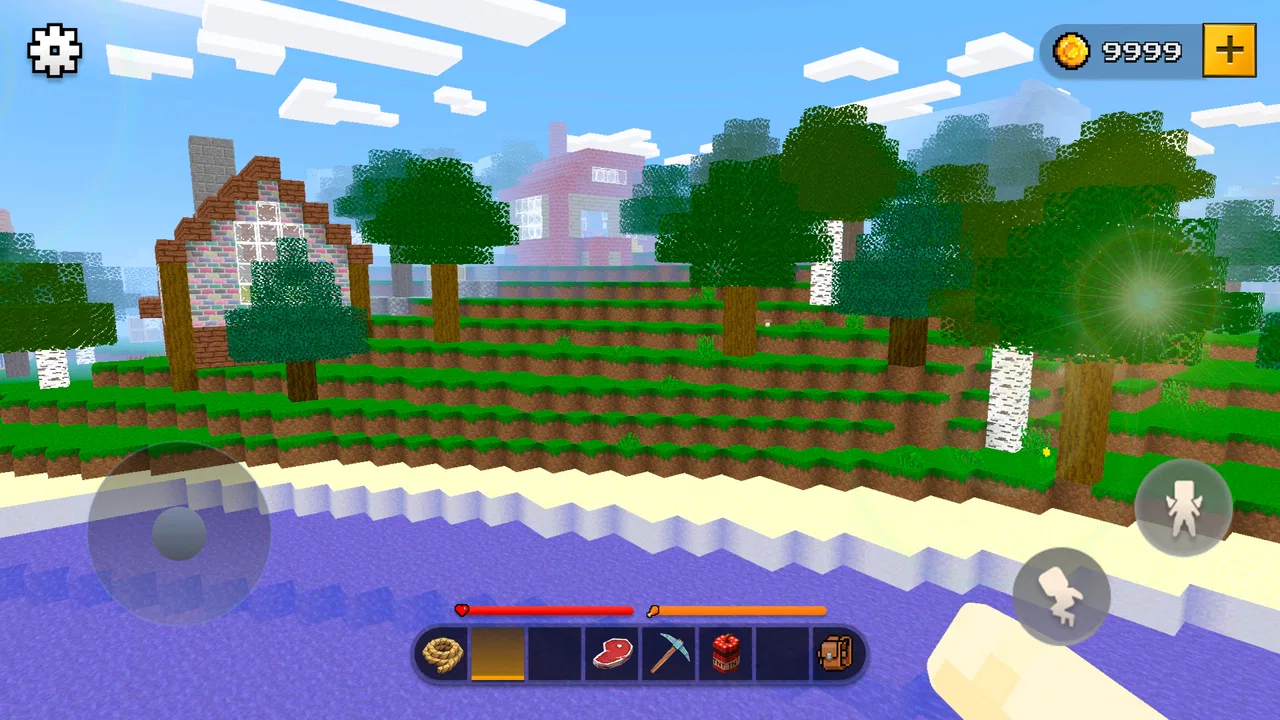
I spent time with Block Craft World Sandbox as a casual building and survival game, and my first impression was that it aims to make block-based creativity easy to pick up on a phone. It sits in the simulation category, but it is not a quiet design toy: survival pressure, resource gathering, construction, and exploration all compete for your attention. That mix gives it more purpose than a simple free-building app, while also making the opening hours busier than the short store description suggests.
The game is free to download, with optional purchases ranging from $1.99 to $49.99 per item. That makes it approachable for someone who wants to test the basic loop without paying first, although I would still treat the purchase screen as part of the experience and decide in advance whether I am comfortable spending. The Teen content rating is also worth noting for families choosing a game for a younger player.
HyperFusion Games has positioned this as a broad sandbox rather than a narrowly scripted adventure. The result is best understood as a flexible block world where I can set my own short-term objective: make a shelter, gather materials, improve a construction, or simply experiment with shapes. I enjoyed that freedom most when I played in short sessions and gave myself one clear task instead of trying to build an entire world immediately.
You May Also Like

 Blood Strike: 2.5 Anniversary
Blood Strike’s Loadouts Turn Every Drop Into a Tactical Gamble
A close look at Blood Strike’s custom loadouts: how fast access to signature weapons reshapes its battle royale rhythm, rewards preparation, and narrows the gap between fights.

 Pandora - Music & Podcasts
Pandora’s Music Is Easy to Start, but Harder to Recover
Pandora’s strength is its low-effort path from a seed to a station. Its weak spot is how much confidence it asks you to place in connection, setup, and quiet recovery.

 8 Ball Pool
 Is Built on Rivalries, Rematches, and Routine
A close look at the rivalries, rematches, shared routines, and unanswered safety questions that turn a quick pool match into a persistent mobile community.

 Samsung Music
’s Quiet Strength Is Playing What You Already Own
Its reach comes less from spectacle than from dependable access to a personal library. That simplicity is both the app’s strongest retention engine and its ceiling.

 AccuWeather: Weather Radar
AccuWeather Review: A Quick, Clear Forecast for Everyday Decisions
For everyday plans, the best forecast is the one you can understand quickly. AccuWeather makes rain timing, radar, and local conditions easy to act on, with a few trade-offs.

 Hill Climb Racing
Why Hill Climb Racing Still Turns Crashes Into One More Run
A tiny car, a bumpy hill and one more upgrade: Hill Climb Racing keeps resurfacing because its simple chaos makes every near-miss feel personal.
More From Our News Desk



How the current version feels to play
When I come back to a block-building game, I first want to know whether the current build supports the small routines that make a long project manageable. In this section, I look at how the present version fits into a practical play session, from choosing a modest goal to deciding when to pause. That gives a useful baseline before considering what the version history may mean for someone returning later.
A gentle start that quickly becomes self-directed
The strongest part of the experience is the handoff from guided beginning to personal project. Early on, I wanted enough materials and space to create something useful, but the game did not need to dictate every move for long. Once I understood the basic rhythm of collecting, placing, and improving, I could make decisions based on what I wanted to see in the world rather than simply following instructions.
That freedom is also the first important limitation. Players who need a strong story, named characters, or a carefully paced campaign may find the sandbox structure loose. There is no substitute for a traditional progression system when you want a clear sequence of dramatic goals. I would recommend this more readily to someone who likes making their own projects than to someone looking for a narrative adventure with a definite ending.
The simulation label makes sense because the appeal comes from managing a small personal environment. Even a modest shelter creates a useful routine: collect what is nearby, decide what deserves storage or construction, then return to improve the space. I found that loop more satisfying when I treated the first building as a workshop rather than a final home. Leaving room for later expansion prevents the common mistake of filling every available block too early.
Why the building tools matter more than the premise
Block construction is familiar territory on mobile, so the real test is whether the controls make experimentation comfortable. Here, I found the game most enjoyable when I slowed down and built in layers. I would outline a room first, check its proportions from several angles, and only then add decorative details. That workflow reduces accidental edits and makes a large project feel manageable on a touchscreen.
A useful habit is to separate functional construction from decoration. I used the first pass for entrances, accessible paths, and storage space, then returned with visual changes once the layout worked. This sounds simple, but it matters in a sandbox: rebuilding a badly planned structure can consume more time than gathering the materials in the first place. Anyone starting a large castle, tower, or village should reserve an open central area and avoid placing permanent-looking walls until the footprint feels right.
The game is also a reasonable creative outlet for players who do not want the complexity of a full desktop building tool. I can open it, make visible progress, and stop without needing a long uninterrupted session. That makes it a good fit for a commute, a break, or an evening when I want something active but not mentally demanding in the same way as a competitive game.
Survival changes the way I build
Survival elements give construction a practical reason to exist. A shelter is not only decoration; it becomes a marker for progress and a place to organize the next trip. I liked this because it made resource gathering feel connected to a personal objective. Instead of collecting materials without a plan, I could decide that the next session would focus on extending a room, improving an entrance, or preparing a more useful base.
At the same time, survival pressure can interrupt creative momentum. If I begin with an ambitious design, the need to gather basic resources can make the project feel slower than expected. My solution was to keep two goals active: one practical task that improved the base and one creative task that made it feel personal. That balance kept the game from becoming either pure maintenance or an overly expensive construction exercise.
Players should also think about the difference between a quick build and a long-term world. A small shelter is easy to understand and rewarding early. A settlement or elaborate landmark requires more patience, organization, and willingness to revise. I would not start with the largest idea in my head. I would build a compact prototype first, learn how much space the layout really needs, and then expand it once the design proves itself.
What the update history suggests for players
I treat version history as context, not a promise about what comes next. Here, I focus on how a player can use the current release as a sensible checkpoint and keep expectations grounded when deciding whether to continue an existing world. For anyone weighing a return against a fresh start, the next section considers how to make that choice without turning a casual sandbox into a chore.
Version 1.6.8 and the present state
The current version is 1.6.8, which is the version I would use as the reference point when deciding whether to install today. The game originally arrived on March 15, 2024, so it is not being presented as an old, abandoned experiment. Its continued presence in the store and its audience size suggest that the basic concept has found a substantial mobile audience, but popularity alone does not tell me whether it matches a particular player’s taste.
The public figures attached to it are encouraging: the game has a 4.6 average from around fifteen thousand ratings and has passed five million installs. I read those numbers as evidence that the accessible block-building formula works for many players, not as a guarantee that every device or play style will feel equally comfortable. The experience still depends heavily on whether you enjoy open-ended goals and are willing to manage the limits of a free-to-play game.
The version number is useful mainly as a checkpoint. If I were returning after a break, I would update before judging the game again, because an older installation may not represent the current balance or interface. I would also keep expectations realistic: a version update can refine the experience, but it does not automatically turn a sandbox into a story-driven game or remove the need for personal planning.
How the evolution affects returning players
For an existing player, the biggest benefit of a current build is consistency. Returning to a world is much easier when the controls, construction habits, and resource routines still feel familiar. I would begin by revisiting an unfinished project instead of immediately starting over. That gives me a practical way to notice whether the present version feels smoother while also recovering the motivation that made me install the game originally.
New players should not compare their first session with a veteran’s finished world. A mature-looking build hides the small decisions behind it: where to place a work area, how much space to leave between structures, and which materials are worth saving for a later design. I recommend keeping the first project deliberately small. A compact base teaches more about the game’s rhythm than an oversized plan that stalls before it becomes recognizable.
One overlooked advantage of this approach is that it makes the game easier to evaluate without spending money. I can learn whether gathering and building feel satisfying using a modest project, rather than buying items to accelerate a plan I may abandon. If the basic loop is not enjoyable at that scale, purchases will not solve the underlying mismatch.
The free-to-play question
The free entry point is a genuine strength because it lets curious players test the world before committing. However, optional purchases priced from $1.99 to $49.99 per item create a wide spending range. I would be especially careful with large projects, because ambition can make acceleration feel tempting. Setting a personal rule before playing—such as waiting until I have completed a small build naturally—helps me judge whether a purchase adds convenience or merely shortens the satisfying part of the game.
This is also where the game differs from a paid sandbox. A paid alternative may offer a more predictable ownership model, while this one lowers the barrier to trying it but asks the player to make more deliberate choices around optional spending. Neither approach is automatically better. For someone who wants a free afternoon of experimentation, the current model is convenient. For someone who dislikes any in-game purchase prompts, a paid building game may be a calmer choice.
Where it fits among block-building alternatives
Compared with a pure creative sandbox, this game gives survival and resource gathering more influence over what I build. That can make a simple house feel earned, but it also means I cannot always move directly from an idea to the finished result. A pure creative option is better when the priority is immediate architectural experimentation, especially for testing many designs quickly.
Compared with a larger survival game, Block Craft World Sandbox feels easier to approach. Its appeal is not necessarily deep simulation or a huge collection of interconnected systems; it is the approachable combination of blocks, personal construction, and survival-flavored routine. Players who want complicated automation, a substantial narrative, or a highly competitive multiplayer environment should look elsewhere rather than expecting this title to become something it is not.
The most useful comparison is therefore about commitment. This game suits me when I want a project I can understand within a short session and continue gradually. A more demanding alternative is preferable when I want a world that constantly presents complex problems. A simpler creative app is preferable when I only want to design without gathering or survival concerns. Knowing which of those three moods I am in prevents disappointment.
Who will get the most from it
I would recommend it to players who enjoy visual progress, flexible objectives, and the feeling of turning raw materials into a place that reflects their choices. It is particularly suitable for someone who likes decorating, planning small environments, and returning to improve an existing project. The free price also makes it easy to sample before deciding whether the loop deserves regular play.
I would be more cautious about recommending it to players who need a strong campaign, dislike repeating resource routines, or want every session to deliver a clear reward. The Teen rating should guide family decisions as well. And if optional purchases are a firm deal-breaker, it may be better to choose a paid alternative with a model that feels more comfortable from the beginning.
Practical ways to get more from a first session
My preferred opening routine is simple: make a small shelter, leave a working area beside it, and keep the surrounding space open. This gives me a reference point without locking the whole area into a design too early. I then choose one visible improvement for the next session, such as a larger room or a clearer entrance. The game feels more rewarding when every visit changes the world in a noticeable way.
For larger builds, I would use temporary outlines before committing to detailed walls. A rough footprint exposes awkward proportions early, when correcting them is cheap in time and materials. I would also avoid building every structure at the same height. Varying the scale of rooms and leaving sightlines between them can make a small settlement feel more intentional without requiring an enormous amount of decoration.
Another useful trade-off is deciding when to stop gathering. It is easy to spend an entire session preparing for a future build and never actually place anything. I prefer a short gather-and-build cycle: collect enough for one concrete improvement, construct it, then reassess. That rhythm keeps the survival side connected to the creative side and makes progress visible even when the session is brief.
What I would like to see next
The current version gives the game a solid basis, but the next stage should focus on making long-term projects easier to manage without removing the freedom that makes the sandbox appealing. Better support for planning, organizing materials, or returning to unfinished structures would have a direct effect on experienced players. Those improvements would matter more to me than simply adding more things to collect.
I would also watch how the balance between free play and optional purchases develops. The best outcome would be a system where spending remains a convenience rather than a requirement for enjoying ambitious construction. That distinction is important because the game’s strongest appeal is personal creativity; anything that makes creativity feel gated weakens the reason to stay.
New players should watch for whether future versions continue to respect both sides of the audience: people who want a relaxed building session and people who enjoy survival-driven progress. If updates make the game too demanding, casual builders may lose interest. If they make survival irrelevant, the world may feel less purposeful. The most promising direction is one that lets players choose their own pace.
After reviewing the current experience, I see Block Craft World Sandbox as a friendly, flexible option for mobile players who want to build gradually rather than follow a fixed adventure. Its combination of free access, block construction, and survival-flavored goals gives each small project a sense of purpose. The game is not the right replacement for a deep survival epic, a purely creative design tool, or a traditional story game, but it does not need to be.
My honest recommendation is to install it if you enjoy setting your own goals and can approach optional purchases with a clear limit. Start with a compact base, learn the rhythm without rushing, and let the world grow from practical decisions. With that mindset, the game’s current version offers a pleasant way to turn short mobile sessions into a longer personal building project, while leaving enough room for future improvements to make returning even more worthwhile.
FAQs for Block Craft World Sandbox
01What is Block Craft World Sandbox?
Block Craft World Sandbox is a creative building game that lets you explore a block-based world, collect resources, and construct your own houses, structures, and landscapes. It is designed for players who enjoy open-ended gameplay rather than a fixed story. You can experiment with different building ideas, decorate environments, and gradually create a personal world using simple, familiar sandbox mechanics.
02Can I play Block Craft World Sandbox offline?
The game may allow you to build and explore without a constant internet connection, but some features can depend on online access. Advertising, updates, cloud-related functions, multiplayer elements, or downloadable content may require an active connection. Before playing offline, it is best to launch the game once while connected and check which modes remain available on your device.
03Is Block Craft World Sandbox free to download and play?
Block Craft World Sandbox is generally available as a free download, allowing users to try the main gameplay without paying upfront. However, free games can include advertisements, optional purchases, or extra content that is not part of the basic experience. Parents should review the device’s purchase settings, especially if children will be playing and using the game independently.
04Is Block Craft World Sandbox suitable for children?
The creative, non-realistic block graphics and building-focused gameplay can make Block Craft World Sandbox appealing to younger players. Nevertheless, suitability depends on the child’s age, patience, and ability to handle advertisements or optional purchases. Adults should review the store rating, privacy information, and available parental controls, and monitor online features if the installed version includes communication or multiplayer functions.
05What device requirements and permissions does the game need?
Before downloading Block Craft World Sandbox, make sure your Android or iOS device has enough free storage, a supported operating-system version, and sufficient memory for smooth performance. Larger worlds may run less comfortably on older phones or tablets. The game may request permissions related to advertising, analytics, notifications, or storage, so review each permission and deny anything you consider unnecessary.
Pros
- Easy-to-learn building tools suit beginners and younger players.
- Creative mode lets you design houses
- cities
- and custom landscapes.
- Block-based graphics run smoothly on many older Android devices.
- Exploring user-created worlds adds variety beyond standard building.
- Offline play is useful when you have no internet connection.
Cons
- Some advanced building options may require in-app purchases.
- Large worlds can become repetitive after extended play sessions.
- Controls may feel imprecise when placing blocks on small areas.
- Ads can interrupt gameplay
- especially in the free version.
- Limited social features reduce interaction with other builders.

Block Craft World Sandbox
Gallery